If most of your mileage is on the motorway, the car you need is very different from one built for short trips — here's what we'd actually buy at every budget, from under £5,000 to £25,000 and beyond.
Price guide checked: August 2026.
If most of your mileage is spent on the motorway, the car you need is very different to the one someone needs for a five-mile trip into town.
You want something that sits quietly at 70 mph, holds a straight line properly, has enough torque that it does not need working hard every time you overtake and, most importantly, will cope with covering serious mileage without turning every service into a financial disaster.
That does not automatically mean buying the newest car you can afford. A well-maintained car with 90,000 motorway miles can be a far better buy than one with 50,000 miles that has spent its life doing cold starts and short trips.
These are the cars we would be looking at in each price range, plus the engines and specifications we would actually choose.
Prices are a guide to normal UK asking prices. Age, mileage, condition and specification can move them around massively.
Before We Start: Does a Diesel Actually Suit You?
For genuine motorway mileage, a diesel still makes a lot of sense. It produces its torque low down, normally gives better fuel economy at a steady speed and motorway driving gives the DPF a much better chance of completing a regeneration properly.
That does not mean every diesel is automatically a good buy.
A modern diesel still has a DPF, EGR system and, on many Euro 6 cars, an SCR system using AdBlue. If the car has been used for constant short journeys, faults in those systems can already be building before a warning light appears.
If you only do 6,000 miles a year and most journeys are local, we would usually look at a petrol or hybrid instead. If you regularly do long runs and 15,000-plus miles a year, this is where a good diesel starts to make sense.
Under £5,000: Skoda Octavia 2.0 TDI
What we would look for: 2013–2017 Octavia Mk3, 2.0 TDI, preferably a manual in SE, SE Business or Elegance trim.
The Octavia is not the most exciting car here, but at this budget that is not the point. It is light for its size, has plenty of room, has a big boot and the 2.0 TDI is much better suited to repeated motorway use than an underpowered small diesel.
The 150 PS version has roughly 320 Nm of torque, so it will sit in sixth gear without constantly needing to change down. On a sensible set of tyres, 55–60 mpg on a long run is realistic when the car is healthy and driven properly.
Why We'd Choose the 2.0 TDI Over the 1.6
The 1.6 TDI can be economical, but the 2.0 does not have to work as hard in a loaded car or when overtaking. The extra torque makes it a much more relaxed motorway car. We would rather have a properly maintained 2.0 TDI with slightly higher mileage than a neglected 1.6 bought purely because the number on the dashboard is lower.
What to Check on the Octavia
- Evidence of timing-belt and water-pump replacement. Do not accept “it should have been done” as proof.
- Coolant level and signs of water-pump or thermostat-housing leaks.
- DPF soot loading and regeneration history on diagnostic equipment, not just the fact there is no warning light.
- EGR operation, especially if the car has previously done a lot of short trips.
- Clutch and dual-mass flywheel for vibration, rattling or judder.
- On a DSG, proof that the gearbox has been serviced at the correct intervals for the gearbox fitted.
- Uneven rear-tyre wear, suspension knocks and tired dampers. At this price, age-related wear matters as much as the engine.
Our verdict: Probably the most sensible motorway car below £5,000. It is not luxurious, but a good one will do the job cheaply and properly.
£5,000–£10,000: Volkswagen Golf GTD
What we would look for: 2014–2019 Mk7 Golf GTD, ideally a five-door Euro 6 car with proper service history. Manual or DSG can both be good, but the condition matters more than the gearbox choice.
The Golf GTD is a great option for someone who covers motorway miles but does not want a large, ordinary-looking diesel saloon. It gives you the economy and low-down torque of a 2.0 TDI, but with better seats, sharper handling and enough performance to still be enjoyable away from the motorway.
The Mk7 GTD uses the EA288 2.0-litre diesel producing 184 PS and 380 Nm of torque from low revs. That is what makes it work so well on a long run. It will sit comfortably at motorway speed, but when you need to overtake it does not feel like a normal economy-focused diesel. A healthy, standard car should be capable of high-40s to low-50s mpg on a sensible motorway journey.
It is firmer than an Octavia or most larger motorway cars, especially on 19-inch wheels, so we would prioritise a car on good-quality 18-inch tyres. The largest wheels might look better in an advert, but they make the ride harsher and increase the chances of buckled wheels, cracked tyres and expensive replacements.
Manual or DSG?
The manual is the simpler choice and can be cheaper to own, but the DSG suits the GTD really well. The important bit is maintenance. A wet-clutch DSG that has had the correct oil and filter changes is a completely different purchase to one with no gearbox history.
Drive a DSG from cold and check for hesitation pulling away, shuddering at low speed and harsh engagement of drive or reverse. None of those should be dismissed as “just how DSGs are.” On a manual, listen for dual-mass flywheel rattle and check for clutch slip under load in a higher gear.
What to Check on the Golf GTD
- Evidence of timing-belt and water-pump replacement, or a clear date for when they are next due.
- Coolant level and signs of water-pump or thermostat-housing leaks.
- DPF differential pressure, soot loading and regeneration history on diagnostics.
- EGR operation and any stored emissions-related faults.
- DSG service records where applicable, or clutch and dual-mass flywheel condition on a manual.
- Heater performance across the cabin. A restricted heater matrix can cause poor or uneven heat.
- Front suspension knocks, rear-shock leaks and uneven tyre wear.
- Condition of the wheels and inner tyre sidewalls, particularly on cars fitted with 19-inch wheels.
- Signs the car has been badly remapped or modified. Plenty of GTDs have had extra power added, and a poor map can place more load on the turbo, clutch, flywheel, DSG and DPF.
- A full diagnostic scan. A warning light being off does not mean the fault history is clean.
Our verdict: The best choice in this price range if you want motorway economy without giving up performance or buying a large car. We would take a standard, well-maintained GTD over a modified low-mileage one every time.
£10,000–£15,000: BMW 320d
What we would look for: An early G20-generation 320d from 2019 onwards if its history and condition are right. If not, buy the best late F30 with the B47 engine rather than forcing the newer shape into budget.
This is where the car can be economical and still feel enjoyable to drive. The G20 320d uses a 2.0-litre diesel producing 190 hp and 400 Nm, with the automatic reaching 62 mph in around 6.8 seconds. That means it is never struggling to join fast traffic or overtake, but it can still return strong motorway fuel economy.
The eight-speed automatic is a big part of why the car works so well. At cruising speed the engine is barely working, yet the gearbox can drop gears smoothly when you need the power. The driving position is also better than most normal hatchbacks and the car feels stable without being as large as a 5 Series or E-Class.
Don't Buy on the Badge Alone
At this money, an early G20 may have covered a fair amount of mileage. That is not automatically a problem. We would focus on how it has been serviced, whether it has matching quality tyres and whether the mileage fits the condition of the interior, pedals and steering wheel.
A car showing “full service history” on an advert may only have had the minimum oil services recorded on the iDrive. We would still want to know about brake fluid, fuel filter, air filter, gearbox oil and any cooling-system work.
What to Check on the 320d
- Confirmation that any outstanding EGR-cooler recall or technical campaign has been completed.
- Coolant loss, EGR faults and signs of repeated low-coolant warnings.
- DPF pressure, soot mass and ash loading on diagnostics.
- AdBlue and NOx-sensor faults.
- Timing-chain noise from cold. The B47 is an improvement over the older N47, but “newer engine” does not mean checks can be skipped.
- Smooth operation of the ZF eight-speed gearbox. We also like to see preventative gearbox servicing on higher-mileage cars, even when “lifetime oil” has been claimed.
- Inner-edge tyre wear and evidence of poor alignment.
Our verdict: The best choice here if you want motorway economy without driving something dull. Just do not stretch the budget so far for the newer shape that you end up buying the worst example available.
£15,000–£25,000: Mercedes-Benz E220d
What we would look for: W213 E220d, ideally a well-maintained SE or sensible AMG Line on 18-inch wheels. Saloon for the quietest drive; estate if you genuinely need the space.
For sitting on a motorway for hours, the E-Class is very hard to beat. The W213 E220d uses Mercedes' OM654 2.0-litre diesel, producing around 194 hp and 400 Nm, paired with a nine-speed automatic gearbox.
Nine gears may sound excessive, but on a long run it works. The engine stays at low revs, wind noise is well controlled and the car has enough torque that it does not feel flat when the road starts climbing or the car is fully loaded.
This is also a good example of why the specification matters. An SE on smaller wheels may not look as aggressive as an AMG Line, but it can be the better motorway car. It rides better, tyres cost less and there is less chance of damaging a wheel on a pothole.
What to Check on the E220d
- A proper scan of the AdBlue and SCR system. NOx sensors, heaters and AdBlue components can make a cheap car expensive very quickly.
- Any history of engine-management lights that have simply been cleared.
- Cooling-system leaks and evidence of coolant loss.
- Correct servicing of the 9G-Tronic gearbox, with smooth shifts both cold and hot.
- Rear subframe condition. This deserves a physical inspection, not a glance at the MOT history.
- On estates, check the rear self-levelling air suspension. The car should sit level after being parked and the compressor should not run excessively.
- All interior electronics, cameras, radar systems and driver-assistance features. Premium-car electrical faults rarely come with premium-looking prices.
Our verdict: The comfort winner. If your working week involves living on the motorway, a good E220d makes long journeys feel much shorter.
£25,000 and Above: BMW 530d
What we would look for: G30 saloon or G31 Touring, preferably rear-wheel drive unless you genuinely need xDrive. A later car is ideal, but condition and maintenance still come before registration year.
If we were choosing one car from this whole list to cover serious motorway mileage, it would be difficult to look past a 530d.
The earlier G30 530d uses BMW's 3.0-litre straight-six diesel with 265 hp and 620 Nm. It will reach motorway speed effortlessly, but the reason we rate it is not outright performance. It is the way the engine produces that power without feeling stressed. At 70 mph it is quiet, smooth and barely working.
The eight-speed automatic suits the engine perfectly, the body is stable in crosswinds and the cabin is a proper step up from a 3 Series. Realistically, it will cost more to run than an Octavia or Golf GTD, but it gives you performance, comfort and long-distance economy in the same car.
Rear-Wheel Drive or xDrive?
For most motorway drivers, rear-wheel drive is the simpler and lighter option. xDrive gives useful traction, but it adds a transfer case, front driveshafts and more components to maintain.
If you do buy xDrive, all four tyres need to be the correct size, similar brand and close in tread depth. Running mismatched tyres can create a rolling-circumference difference that puts constant load through the transfer case.
What to Check on the 530d
- EGR-cooler recall or campaign history, plus any signs of coolant loss.
- DPF, AdBlue, SCR and NOx-sensor data on a full diagnostic scan.
- Evidence of oil changes at sensible intervals. Long manufacturer intervals are not what we would choose for a car we planned to keep into high mileage.
- Smooth ZF gearbox operation and evidence of preventative servicing as mileage rises.
- On xDrive models, tyre matching and transfer-case behaviour at low speed and full steering lock.
- On the G31 Touring, rear air-suspension bags and compressor operation.
- Adaptive dampers, active grille shutters, driver-assistance radar and all electrical equipment.
- Brake condition. Big premium cars can need expensive discs, pads and tyres all at once.
Our verdict: Our overall winner for big motorway mileage. Fast when you need it, relaxed when you do not and capable of excellent economy for a six-cylinder car.
Other Cars Worth Considering
Volvo V90 D4 or B4 Diesel
One of the best seats in the business, plenty of space and a calm motorway drive. Check the emissions system, automatic gearbox history, suspension and all driver-assistance functions. It is a strong alternative to the E-Class if comfort matters more than sporty handling.
Audi A6 40 TDI
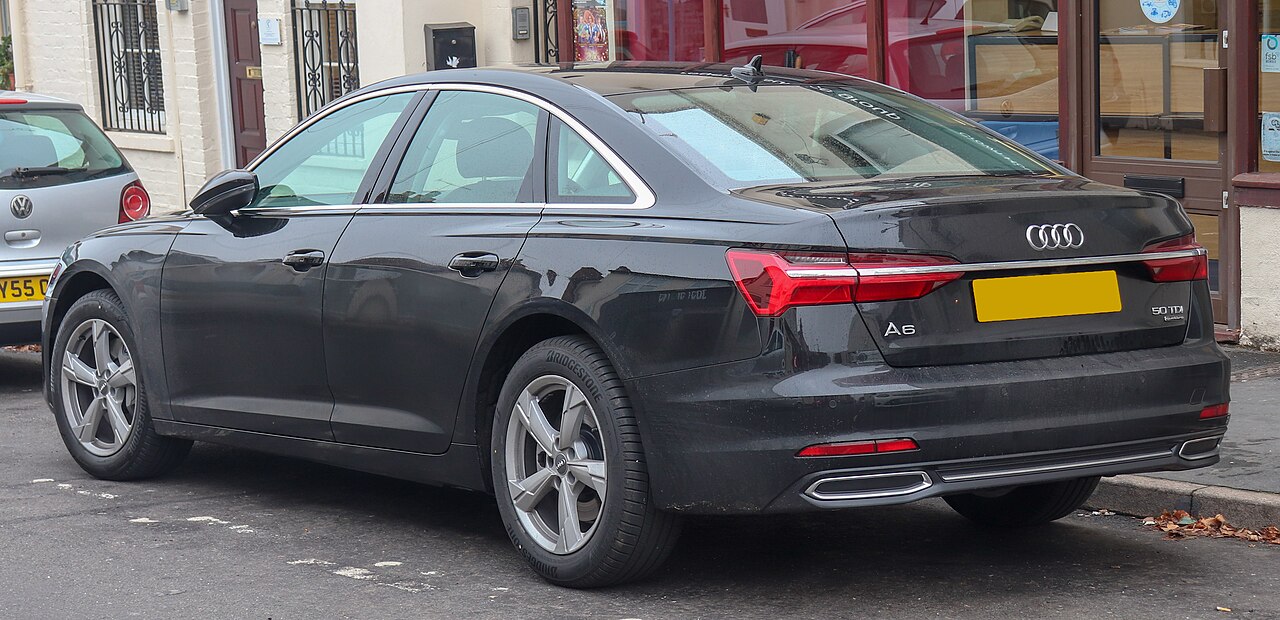
A quiet, stable motorway car with an excellent cabin. The 2.0 TDI is the sensible engine for running costs. As always, check AdBlue and NOx faults, gearbox history, cooling-system leaks and the condition of any complex optional suspension.
Toyota Corolla 2.0 Hybrid
If your driving is mixed rather than almost entirely motorway, the Corolla is worth a look. It will not match a good diesel for effortless high-speed torque and long-range cruising, but the hybrid system suits traffic and urban sections much better. It is the safer direction for someone whose “motorway mileage” is really a mixture of short and long journeys.
The Specification We Would Prioritise
For a motorway car, we would spend money on the things that improve every mile rather than the things that only improve the advert.
- Supportive heated seats
- Adaptive cruise control
- LED or matrix headlights
- 17- or 18-inch wheels rather than the largest option
- Quality matching tyres
- A full-size fuel tank where one was optional
- Parking sensors or a reversing camera
- Sensible suspension rather than the hardest sport setup
- Full, traceable maintenance history
A panoramic roof, huge wheels and an aggressive body kit might help sell the car later, but they do not necessarily make it better at covering 25,000 miles a year.
Mileage Is Not the Enemy — Poor Maintenance Is
We would not reject a motorway car simply because it has covered 100,000 miles. At a steady speed the engine spends long periods fully warm, the clutch is not being used constantly and the DPF has the conditions it needs to regenerate.
The question is whether the servicing has kept up with the mileage.
Look beyond stamps in a book. Check invoices, dates and mileage. Find out when the gearbox was serviced, whether the timing belt is due, what tyres are fitted and whether the same fault keeps appearing through the MOT history.
A clean interior and a fresh valet can make any car look cared for. The mechanical history tells you whether it actually was.
Our Final Picks
- Under £5,000: Skoda Octavia 2.0 TDI
- £5,000–£10,000: Volkswagen Golf GTD
- £10,000–£15,000: BMW 320d
- £15,000–£25,000: Mercedes-Benz E220d
- £25,000+: BMW 530d
There is no perfect motorway car at any budget. There is only the right model, with the right engine, in the right condition.
That final part is what most buyers miss.
Buying One and Want a Second Opinion?
Send Alfa Prestige the advert before you travel or commit to the car. We can assess the specification, MOT history, common faults, likely running costs and the questions you need to ask the seller — all online.
The aim is simple: help you rule out the wrong cars early and buy the right one with your eyes open.

Alfie has over 11 years of experience in the motor trade and founded Alfa Prestige to give buyers the insider knowledge that was previously only available to professionals.